
Marie D. Schmidt; Tobias Glasmachers; Ioannis Iossifidis Understanding how movement relates to muscle activation is a core problem in motor control and a practical challenge for rehabilitation technology. In this article, we train a Long Short-Term Memory (LSTM) model on upper-limb end-effector kinematics to predict activity across eight muscles. The model predicts muscle activity accurately … Read More “New journal article: Predicting Muscle Activity from Upper Limb Kinematics with LSTM Networks” »
Category: scientific publication
Marie Dominique Schmidt; Ioannis Iossifidis Decoding motor intention early and reliably is central to responsive assistive devices and adaptive rehabilitation. In this study, we investigate how precisely movement direction and target location can be inferred from multichannel EMG signals, and how early this information becomes available relative to movement onset. We present a pipeline combining … Read More “New preprint: The Spatial and Temporal Resolution of Motor Intention in Multi-Target Prediction” »
New paper: Performance Boundaries for BCIs Using Error-Related Potentials and Reinforcement Learning
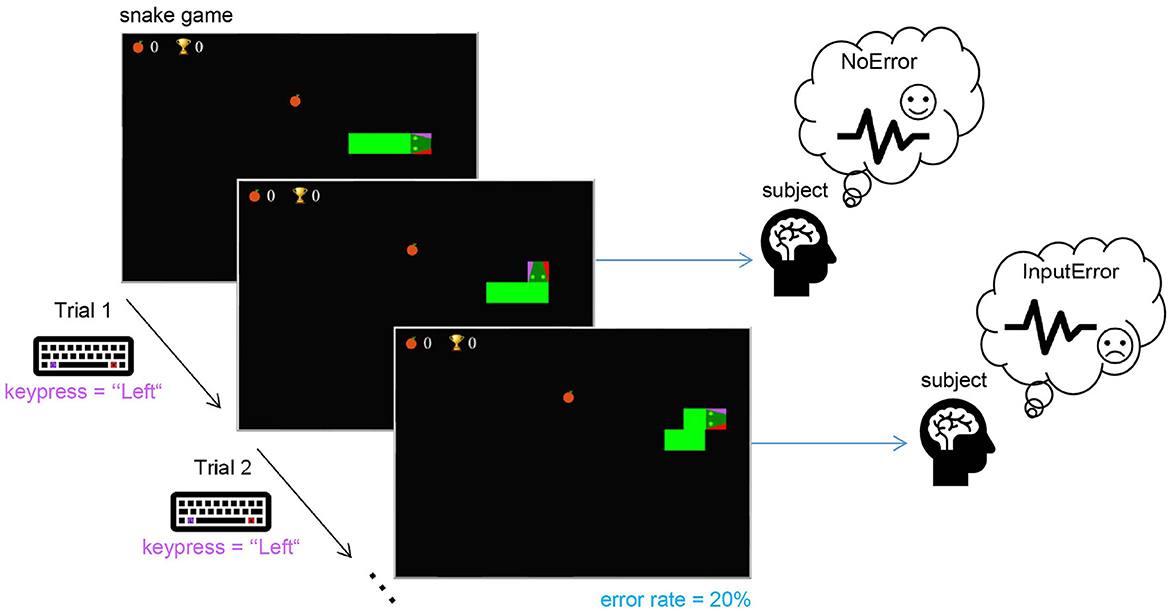
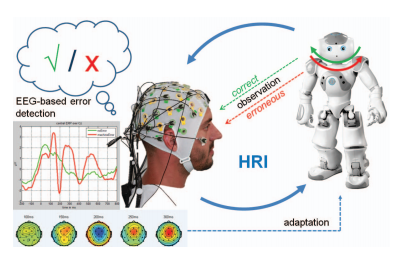
Aline Xavier Fidêncio; Felix Grün; Christian Klaes; Ioannis Iossifidis Non-invasive BCIs are promising assistive technologies, but real-world EEG is non-stationary—often causing performance to degrade over time. One route to robustness is to adapt the system online using feedback signals. In this work we study the limits of a closed-loop BCI framework that uses error-related potentials … Read More “New paper: Performance Boundaries for BCIs Using Error-Related Potentials and Reinforcement Learning” »
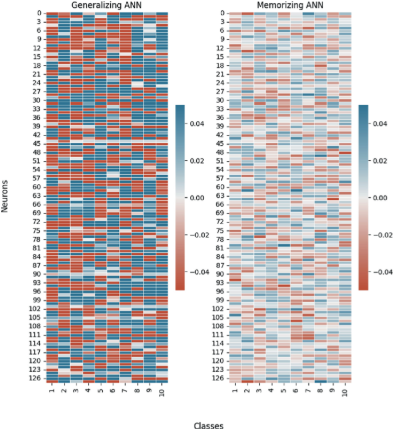
Stephan Johann Lehmler; Muhammad Saif-ur-Rehman; Tobias Glasmachers; Ioannis Iossifidis How can we tell whether a neural network is learning generalizable structure versus memorizing rare patterns? In this paper, we study distributional signatures inside networks trained under memorization-heavy regimes. Our starting point is the idea that memorization corresponds to learning “rare” input features—an effect that can … Read More “New paper: Distributional Properties of ReLU-Activations in Neural Networks That Learn by Memorization” »
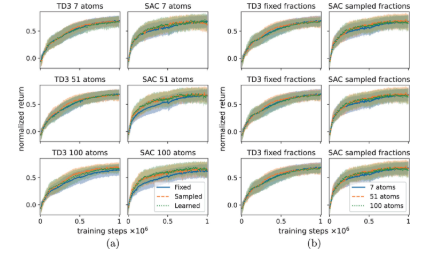
Felix Grün; Muhammad Saif-ur-Rehman; Tobias Glasmachers; Ioannis Iossifidis Distributional reinforcement learning has delivered strong results in discrete-action benchmarks, largely driven by different ways of representing value distributions (e.g., via quantiles) and comparing them during training. In this work, we bring three prominent distributional methods—QR-DQN, IQN, and FQF—into the continuous action domain by integrating distributional critics … Read More “New paper: Invariance to Quantile Selection in Distributional Continuous Control” »
Published in Journal of Neurocomputing: Understanding activation patterns in artificial neural networks by exploring stochastic processes: Discriminating generalization from memorization Stephan Johann Lehmler, Muhammad Saif-ur-Rehman, Tobias Glasmachers, Ioannis Iossifidis for more details: https://doi.org/10.1016/j.neucom.2024.128473
https://www.frontiersin.org/journals/human-neuroscience/articles/10.3389/fnhum.2024.1390714/full Aline Xavier Fidêncio1,2,3*Christian Klaes3Ioannis Iossifidis2 Error-related potentials (ErrPs) are brain signals known to be generated as a reaction to erroneous events. Several works have shown that not only self-made errors but also mistakes generated by external agents can elicit such event-related potentials. The possibility of reliably measuring ErrPs through non-invasive techniques has increased the … Read More “A generic error-related potential classifier based on simulated subjects-Frontiers in Human Neuroscience” »
Investigation of the Interplay of Model-Based and Model-Free Learning Using Reinforcement Learning The reward prediction error hypothesis of dopamine in the brain states that activity of dopaminergic neurons in certain brain regions correlates with the reward prediction error that corresponds to the temporal difference error, often used as a learning signal in model free reinforcement … Read More “BCCN23: Investigation of the Interplay of Model-Based and Model-Free Learning Using Reinforcement Learning” »
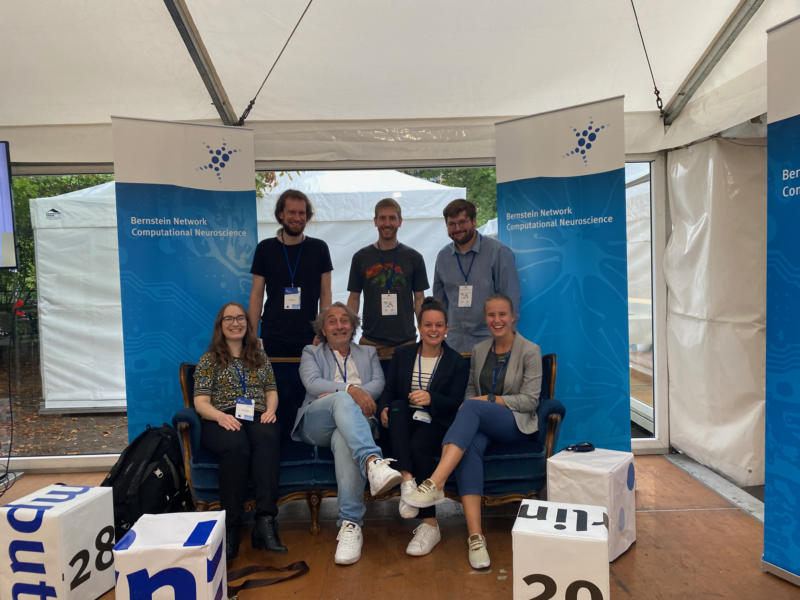
Iossifidis Lab is participating with 4 publications at the Bernstein Conference 2023 in Berlin. Meet us from 27.09 to 29.09.2023 at the Humboldt Universität zu Berlin and Charité
Non-invasive techniques like EEG can record error-related potentials (ErrPs), neural signals associated with error processing and awareness. ErrPs are generated in response to self-made and external errors, including those produced by the BMI. Since ErrPs are implicitly elicited and don’t add extra workload for the subject, they serve as a natural and intrinsic feedback source … Read More “BCCN23: Exploring Error-related Potentials in Adaptive Brain-Machine Interfaces: Challenges and Investigation of Occurrence and Detection Ratios” »