Publications
2025
Aline Xavier Fidêncio; Felix Grün; Christian Klaes; Ioannis Iossifidis
Hybrid Brain-Computer Interface Using Error-Related Potential and Reinforcement Learning Journal Article
In: Frontiers in Human Neuroscience, vol. 19, 2025, ISSN: 1662-5161.
Abstract | Links | BibTeX | Tags: adaptive brain-computer interface, BCI, EEG, error-related potentials (ErrPs), Machine Learning, motor imagery (MI), reinforcement learning (RL)
@article{xavierfidencioHybridBraincomputerInterface2025,

title = {Hybrid Brain-Computer Interface Using Error-Related Potential and Reinforcement Learning},

author = {Aline Xavier Fidêncio and Felix Grün and Christian Klaes and Ioannis Iossifidis},

editor = {Frontiers},

url = {https://www.frontiersin.org/journals/human-neuroscience/articles/10.3389/fnhum.2025.1569411/full},

doi = {10.3389/fnhum.2025.1569411},

issn = {1662-5161},

year  = {2025},

date = {2025-06-04},

urldate = {2025-06-04},

journal = {Frontiers in Human Neuroscience},

volume = {19},

publisher = {Frontiers},

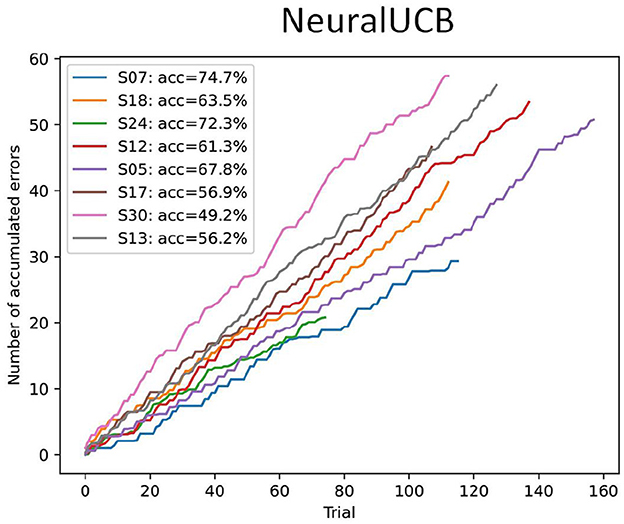
abstract = {Brain-computer interfaces (BCIs) offer alternative communication methods for individuals with motor disabilities, aiming to improve their quality of life through external device control. However, non-invasive BCIs using electroencephalography (EEG) often suffer from performance limitations due to non-stationarities arising from changes in mental state or device characteristics. Addressing these challenges motivates the development of adaptive systems capable of real-time adjustment. This study investigates a novel approach for creating an adaptive, error-related potential (ErrP)-based BCI using reinforcement learning (RL) to dynamically adapt to EEG signal variations. The framework was validated through experiments on a publicly available motor imagery dataset and a novel fast-paced protocol designed to enhance user engagement. Results showed that RL agents effectively learned control policies from user interactions, maintaining robust performance across datasets. However, findings from the game-based protocol revealed that fast-paced motor imagery tasks were ineffective for most participants, highlighting critical challenges in real-time BCI task design. Overall, the results demonstrate the potential of RL for enhancing BCI adaptability while identifying practical constraints in task complexity and user responsiveness.},

keywords = {adaptive brain-computer interface, BCI, EEG, error-related potentials (ErrPs), Machine Learning, motor imagery (MI), reinforcement learning (RL)},

pubstate = {published},

tppubtype = {article}

}
Aline Xavier Fidêncio; Felix Grün; Christian Klaes; Ioannis Iossifidis
Error-Related Potential Driven Reinforcement Learning for Adaptive Brain-Computer Interfaces Journal Article
In: Arxiv, 2025.
Abstract | Links | BibTeX | Tags: BCI, Computer Science - Human-Computer Interaction, Computer Science - Machine Learning, EEG, Quantitative Biology - Neurons and Cognition, Reinforcement learning
@article{fidencioErrorrelatedPotentialDriven2025,

title = {Error-Related Potential Driven Reinforcement Learning for Adaptive Brain-Computer Interfaces},

author = {Aline Xavier Fidêncio and Felix Grün and Christian Klaes and Ioannis Iossifidis},

url = {http://arxiv.org/abs/2502.18594},

doi = {10.48550/arXiv.2502.18594},

year  = {2025},

date = {2025-02-25},

urldate = {2025-02-25},

journal = {Arxiv},

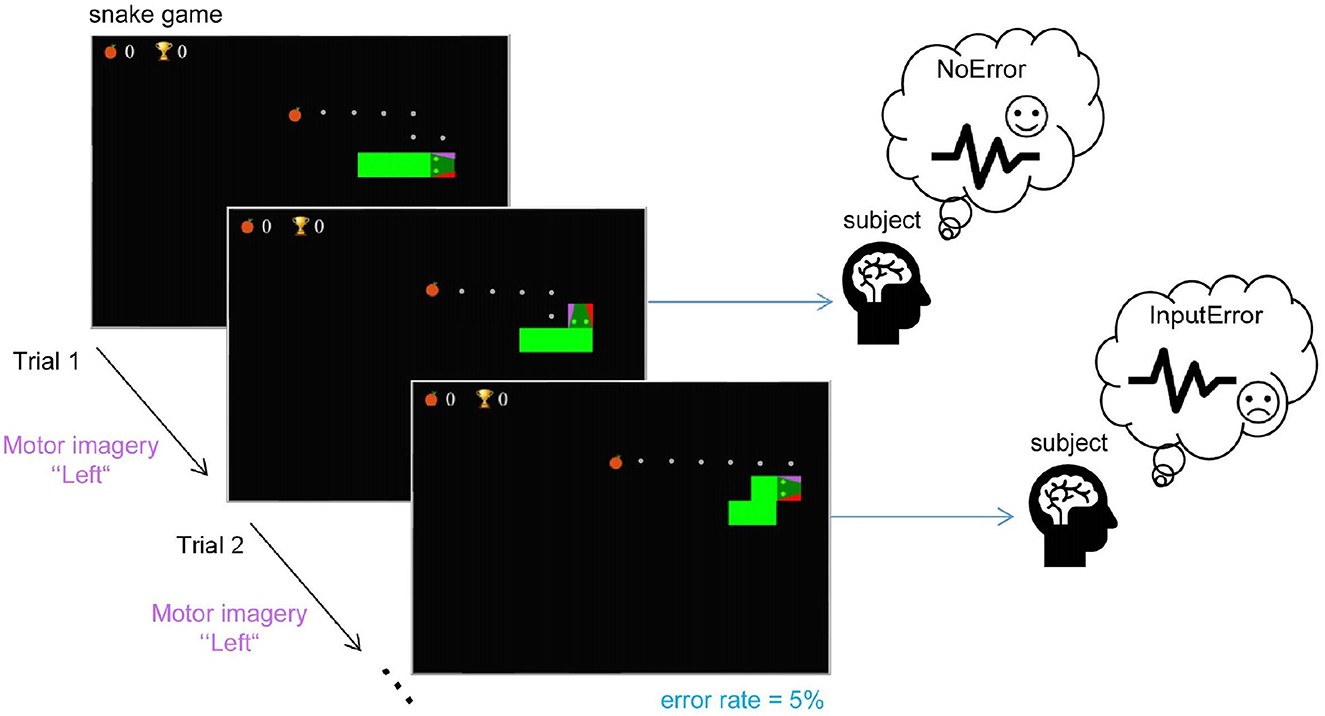
abstract = {Brain-computer interfaces (BCIs) provide alternative communication methods for individuals with motor disabilities by allowing control and interaction with external devices. Non-invasive BCIs, especially those using electroencephalography (EEG), are practical and safe for various applications. However, their performance is often hindered by EEG non-stationarities, caused by changing mental states or device characteristics like electrode impedance. This challenge has spurred research into adaptive BCIs that can handle such variations. In recent years, interest has grown in using error-related potentials (ErrPs) to enhance BCI performance. ErrPs, neural responses to errors, can be detected non-invasively and have been integrated into different BCI paradigms to improve performance through error correction or adaptation. This research introduces a novel adaptive ErrP-based BCI approach using reinforcement learning (RL). We demonstrate the feasibility of an RL-driven adaptive framework incorporating ErrPs and motor imagery. Utilizing two RL agents, the framework adapts dynamically to EEG non-stationarities. Validation was conducted using a publicly available motor imagery dataset and a fast-paced game designed to boost user engagement. Results show the framework's promise, with RL agents learning control policies from user interactions and achieving robust performance across datasets. However, a critical insight from the game-based protocol revealed that motor imagery in a high-speed interaction paradigm was largely ineffective for participants, highlighting task design limitations in real-time BCI applications. These findings underscore the potential of RL for adaptive BCIs while pointing out practical constraints related to task complexity and user responsiveness.},

keywords = {BCI, Computer Science - Human-Computer Interaction, Computer Science - Machine Learning, EEG, Quantitative Biology - Neurons and Cognition, Reinforcement learning},

pubstate = {published},

tppubtype = {article}

}
2024
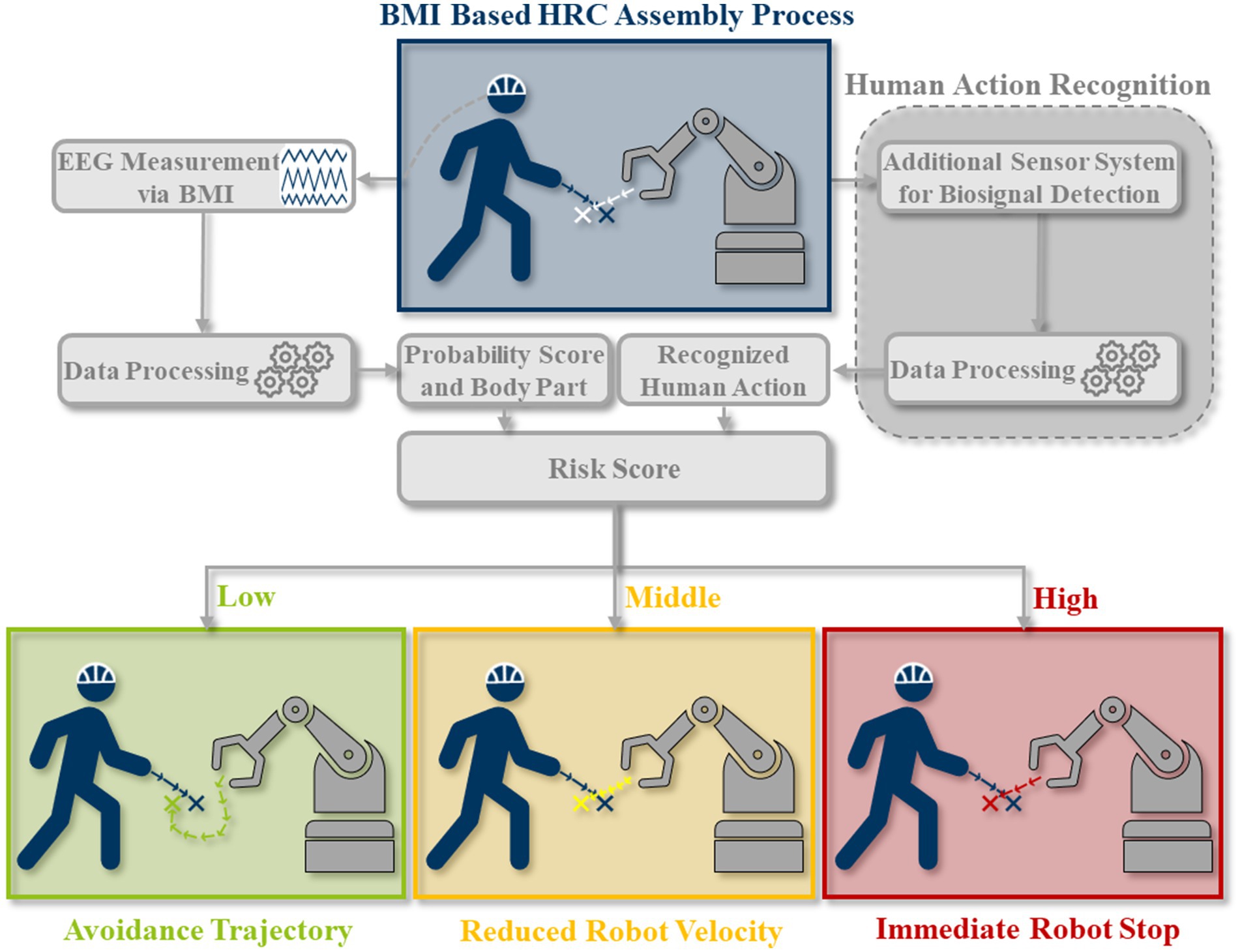
Artur Pilacinski; Lukas Christ; Marius Boshoff; Ioannis Iossifidis; Patrick Adler; Michael Miro; Bernd Kuhlenkötter; Christian Klaes
In: Frontiers in Neurorobotics, vol. 18, 2024, ISSN: 1662-5218.
Links | BibTeX | Tags: brain-machine interfaces, EEG, Human action recognition, Human-robot collaboration, Sensor Fusion
@article{pilacinskiHumanCollaborativeLoop2024b,

title = {Human in the Collaborative Loop: A Strategy for Integrating Human Activity Recognition and Non-Invasive Brain-Machine Interfaces to Control Collaborative Robots},

author = {Artur Pilacinski and Lukas Christ and Marius Boshoff and Ioannis Iossifidis and Patrick Adler and Michael Miro and Bernd Kuhlenkötter and Christian Klaes},

url = {https://www.frontiersin.org/journals/neurorobotics/articles/10.3389/fnbot.2024.1383089/full},

doi = {10.3389/fnbot.2024.1383089},

issn = {1662-5218},

year  = {2024},

date = {2024-09-18},

urldate = {2024-09-18},

journal = {Frontiers in Neurorobotics},

volume = {18},

publisher = {Frontiers},

keywords = {brain-machine interfaces, EEG, Human action recognition, Human-robot collaboration, Sensor Fusion},

pubstate = {published},

tppubtype = {article}

}
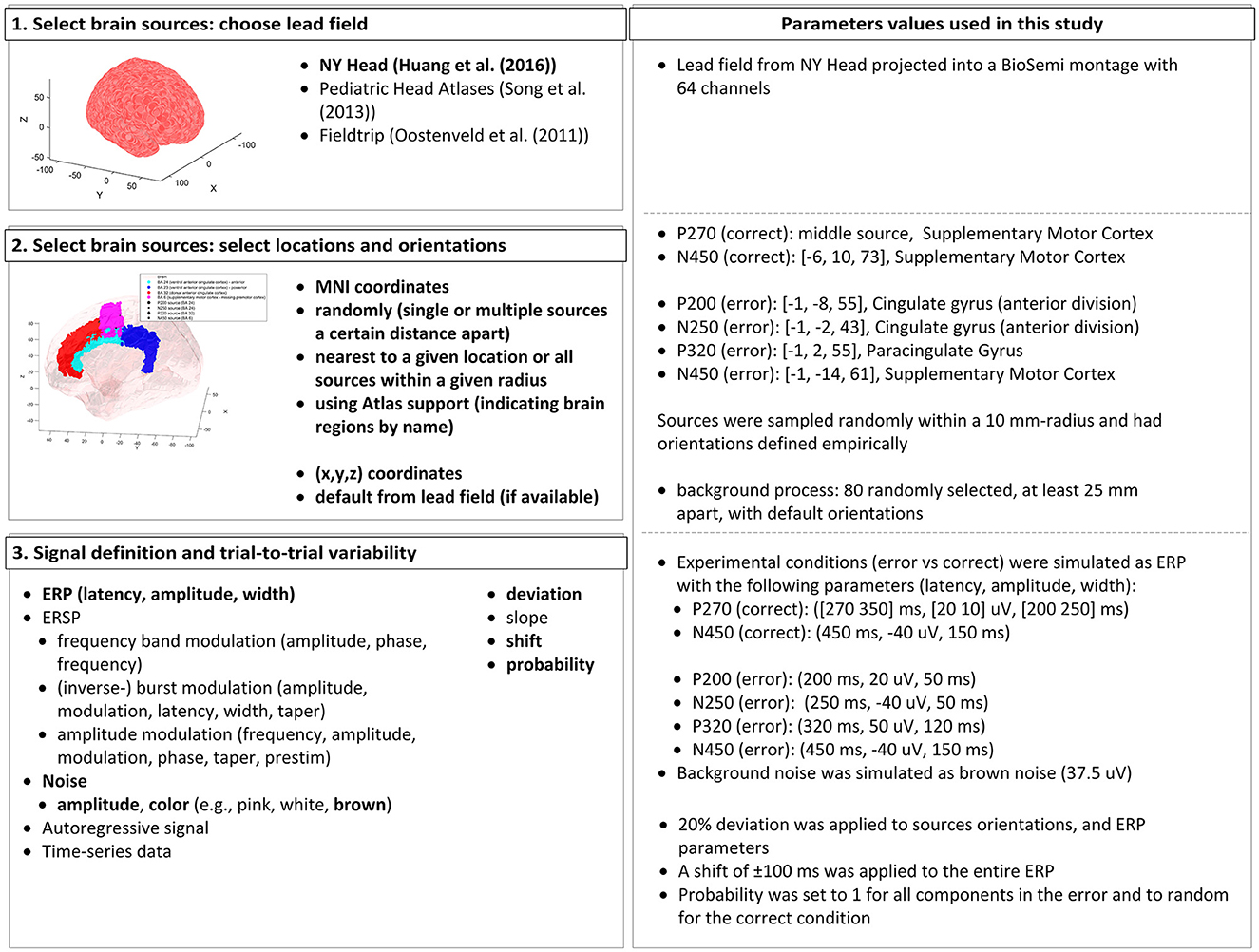
Aline Xavier Fidêncio; Christian Klaes; Ioannis Iossifidis
A Generic Error-Related Potential Classifier Based on Simulated Subjects Journal Article
In: Frontiers in Human Neuroscience, vol. 18, pp. 1390714, 2024, ISSN: 1662-5161.
Abstract | Links | BibTeX | Tags: adaptive brain-machine (computer) interface, BCI, EEG, Error-related potential (ErrP), ErrP classifier, Generic decoder, Machine Learning, SEREEGA, Simulation
@article{xavierfidencioGenericErrorrelatedPotential2024b,

title = {A Generic Error-Related Potential Classifier Based on Simulated Subjects},

author = {Aline Xavier Fidêncio and Christian Klaes and Ioannis Iossifidis},

editor = {Frontiers Media SA},

url = {https://www.frontiersin.org/journals/human-neuroscience/articles/10.3389/fnhum.2024.1390714/full},

doi = {10.3389/fnhum.2024.1390714},

issn = {1662-5161},

year  = {2024},

date = {2024-07-19},

urldate = {2024-07-19},

journal = {Frontiers in Human Neuroscience},

volume = {18},

pages = {1390714},

publisher = {Frontiers},

abstract = {$<$p$>$Error-related potentials (ErrPs) are brain signals known to be generated as a reaction to erroneous events. Several works have shown that not only self-made errors but also mistakes generated by external agents can elicit such event-related potentials. The possibility of reliably measuring ErrPs through non-invasive techniques has increased the interest in the brain-computer interface (BCI) community in using such signals to improve performance, for example, by performing error correction. Extensive calibration sessions are typically necessary to gather sufficient trials for training subject-specific ErrP classifiers. This procedure is not only time-consuming but also boresome for participants. In this paper, we explore the effectiveness of ErrPs in closed-loop systems, emphasizing their dependency on precise single-trial classification. To guarantee the presence of an ErrPs signal in the data we employ and to ensure that the parameters defining ErrPs are systematically varied, we utilize the open-source toolbox SEREEGA for data simulation. We generated training instances and evaluated the performance of the generic classifier on both simulated and real-world datasets, proposing a promising alternative to conventional calibration techniques. Results show that a generic support vector machine classifier reaches balanced accuracies of 72.9%, 62.7%, 71.0%, and 70.8% on each validation dataset. While performing similarly to a leave-one-subject-out approach for error class detection, the proposed classifier shows promising generalization across different datasets and subjects without further adaptation. Moreover, by utilizing SEREEGA, we can systematically adjust parameters to accommodate the variability in the ErrP, facilitating the systematic validation of closed-loop setups. Furthermore, our objective is to develop a universal ErrP classifier that captures the signal's variability, enabling it to determine the presence or absence of an ErrP in real EEG data.$<$/p$>$},

keywords = {adaptive brain-machine (computer) interface, BCI, EEG, Error-related potential (ErrP), ErrP classifier, Generic decoder, Machine Learning, SEREEGA, Simulation},

pubstate = {published},

tppubtype = {article}

}
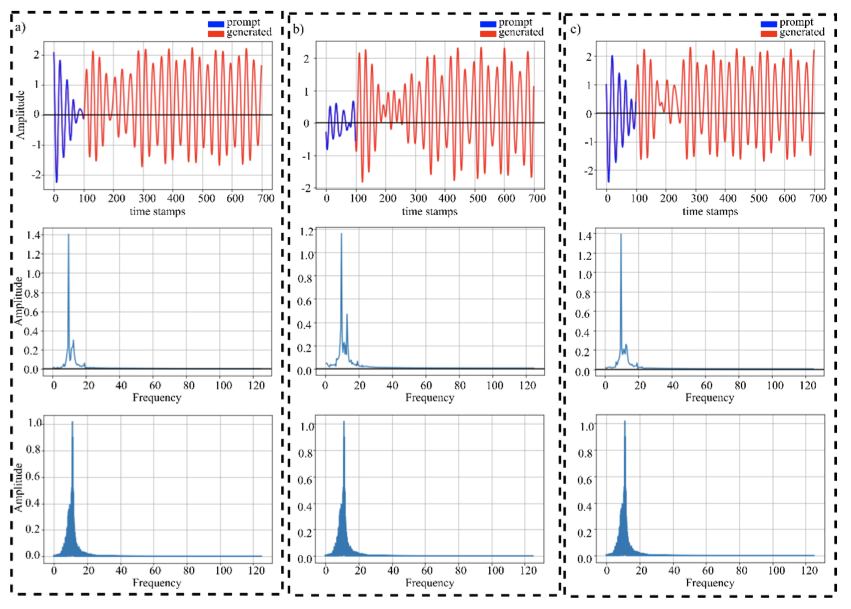
Omair Ali; Muhammad Saif-ur-Rehman; Marita Metzler; Tobias Glasmachers; Ioannis Iossifidis; Christian Klaes
GET: A Generative EEG Transformer for Continuous Context-Based Neural Signals Journal Article
In: arXiv:2406.03115 [q-bio], 2024.
Abstract | Links | BibTeX | Tags: BCI, EEG, Machine Learning, Quantitative Biology - Neurons and Cognition
@article{aliGETGenerativeEEG2024,

title = {GET: A Generative EEG Transformer for Continuous Context-Based Neural Signals},

author = {Omair Ali and Muhammad Saif-ur-Rehman and Marita Metzler and Tobias Glasmachers and Ioannis Iossifidis and Christian Klaes},

url = {http://arxiv.org/abs/2406.03115},

doi = {10.48550/arXiv.2406.03115},

year  = {2024},

date = {2024-06-09},

urldate = {2024-06-09},

journal = {arXiv:2406.03115 [q-bio]},

abstract = {Generating continuous electroencephalography (EEG) signals through advanced artificial neural networks presents a novel opportunity to enhance brain-computer interface (BCI) technology. This capability has the potential to significantly enhance applications ranging from simulating dynamic brain activity and data augmentation to improving real-time epilepsy detection and BCI inference. By harnessing generative transformer neural networks, specifically designed for EEG signal generation, we can revolutionize the interpretation and interaction with neural data. Generative AI has demonstrated significant success across various domains, from natural language processing (NLP) and computer vision to content creation in visual arts and music. It distinguishes itself by using large-scale datasets to construct context windows during pre-training, a technique that has proven particularly effective in NLP, where models are fine-tuned for specific downstream tasks after extensive foundational training. However, the application of generative AI in the field of BCIs, particularly through the development of continuous, context-rich neural signal generators, has been limited. To address this, we introduce the Generative EEG Transformer (GET), a model leveraging transformer architecture tailored for EEG data. The GET model is pre-trained on diverse EEG datasets, including motor imagery and alpha wave datasets, enabling it to produce high-fidelity neural signals that maintain contextual integrity. Our empirical findings indicate that GET not only faithfully reproduces the frequency spectrum of the training data and input prompts but also robustly generates continuous neural signals. By adopting the successful training strategies of the NLP domain for BCIs, the GET sets a new standard for the development and application of neural signal generation technologies.},

keywords = {BCI, EEG, Machine Learning, Quantitative Biology - Neurons and Cognition},

pubstate = {published},

tppubtype = {article}

}
2022
Aline Xavier Fidencio; Christian Klaes; Ioannis Iossifidis
Error-Related Potentials in Reinforcement Learning-Based Brain-Machine Interfaces Journal Article
In: Frontiers in Human Neuroscience, vol. 16, 2022.
Abstract | Links | BibTeX | Tags: BCI, EEG, error-related potentials, Machine Learning, Reinforcement learning
@article{xavierfidencioErrorrelated,

title = {Error-Related Potentials in Reinforcement Learning-Based Brain-Machine Interfaces},

author = {Aline Xavier Fidencio and Christian Klaes and Ioannis Iossifidis},

url = {https://www.frontiersin.org/article/10.3389/fnhum.2022.806517},

doi = {https://doi.org/10.3389/fnhum.2022.806517},

year  = {2022},

date = {2022-06-24},

urldate = {2022-06-24},

journal = {Frontiers in Human Neuroscience},

volume = {16},

abstract = {The human brain has been an object of extensive investigation in different fields. While several studies have focused on understanding the neural correlates of error processing, advances in brain-machine interface systems using non-invasive techniques further enabled the use of the measured signals in different applications. The possibility of detecting these error-related potentials (ErrPs) under different experimental setups on a single-trial basis has further increased interest in their integration in closed-loop settings to improve system performance, for example, by performing error correction. Fewer works have, however, aimed at reducing future mistakes or learning. We present a review focused on the current literature using non-invasive systems that have combined the ErrPs information specifically in a reinforcement learning framework to go beyond error correction and have used these signals for learning.},

keywords = {BCI, EEG, error-related potentials, Machine Learning, Reinforcement learning},

pubstate = {published},

tppubtype = {article}

}
Omair Ali; Muhammad Saif-ur-Rehman; Susanne Dyck; Tobias Glasmachers; Ioannis Iossifidis; Christian Klaes
Enhancing the decoding accuracy of EEG signals by the introduction of anchored-STFT and adversarial data augmentation method Journal Article
In: Nature Scientific Reports, vol. 12, iss. 1, pp. 4245, 2022, ISSN: 2045-2322.
Abstract | Links | BibTeX | Tags: Adversarial NN, BCI, computer science, EEG, Machine Learning, Quantitative Biology, Quantitative Methods
@article{aliAnchoredSTFTGNAAExtension2021a,

title = {Enhancing the decoding accuracy of EEG signals by the introduction of anchored-STFT and adversarial data augmentation method},

author = {Omair Ali and Muhammad Saif-ur-Rehman and Susanne Dyck and Tobias Glasmachers and Ioannis Iossifidis and Christian Klaes},

url = {https://www.nature.com/articles/s41598-022-07992-w},

doi = {https://doi.org/10.1038/s41598-022-07992-w},

issn = {2045-2322},

year  = {2022},

date = {2022-03-10},

urldate = {2022-03-10},

journal = {Nature Scientific Reports},

volume = {12},

issue = {1},

pages = {4245},

abstract = {Brain-computer interfaces (BCIs) enable communication between humans and machines by translating brain activity into control commands. Electroencephalography (EEG) signals are one of the most used brain signals in non-invasive BCI applications but are often contaminated with noise. Therefore, it is possible that meaningful patterns for classifying EEG signals are deeply hidden. State-of-the-art deep-learning algorithms are successful in learning hidden, meaningful patterns. However, the quality and the quantity of the presented inputs is pivotal. Here, we propose a novel feature extraction method called anchored Short Time Fourier Transform (anchored-STFT), which is an advanced version of STFT, as it minimizes the trade-off between temporal and spectral resolution presented by STFT. In addition, we propose a novel augmentation method, called gradient norm adversarial augmentation (GNAA). GNAA is not only an augmentation method but is also used to harness adversarial inputs in EEG data, which not only improves the classification accuracy but also enhances the robustness of the classifier. In addition, we also propose a new CNN architecture, namely Skip-Net, for the classification of EEG signals. The proposed pipeline outperforms all state-of-the-art methods and yields an average classification accuracy of 90.7 % and 89.54 % on BCI competition II dataset III and BCI competition IV dataset 2b, respectively.},

keywords = {Adversarial NN, BCI, computer science, EEG, Machine Learning, Quantitative Biology, Quantitative Methods},

pubstate = {published},

tppubtype = {article}

}
Omair Ali; Muhammad Saif-ur-Rehman; Susanne Dyck; Tobias Glasmachers; Ioannis Iossifidis; Christian Klaes
Enhancing the decoding accuracy of EEG signals by the introduction of anchored-STFT and adversarial data augmentation method Journal Article
In: Nature Scientific Reports, vol. 12, iss. 1, pp. 4245, 2022, ISSN: 2045-2322.
Abstract | Links | BibTeX | Tags: Adversarial NN, BCI, computer science, EEG, Machine Learning, Quantitative Biology, Quantitative Methods
@article{aliAnchoredSTFTGNAAExtension2021ab,

title = {Enhancing the decoding accuracy of EEG signals by the introduction of anchored-STFT and adversarial data augmentation method},

author = {Omair Ali and Muhammad Saif-ur-Rehman and Susanne Dyck and Tobias Glasmachers and Ioannis Iossifidis and Christian Klaes},

url = {https://www.nature.com/articles/s41598-022-07992-w},

doi = {https://doi.org/10.1038/s41598-022-07992-w},

issn = {2045-2322},

year  = {2022},

date = {2022-03-10},

urldate = {2022-03-10},

journal = {Nature Scientific Reports},

volume = {12},

issue = {1},

pages = {4245},

abstract = {Brain-computer interfaces (BCIs) enable communication between humans and machines by translating brain activity into control commands. Electroencephalography (EEG) signals are one of the most used brain signals in non-invasive BCI applications but are often contaminated with noise. Therefore, it is possible that meaningful patterns for classifying EEG signals are deeply hidden. State-of-the-art deep-learning algorithms are successful in learning hidden, meaningful patterns. However, the quality and the quantity of the presented inputs is pivotal. Here, we propose a novel feature extraction method called anchored Short Time Fourier Transform (anchored-STFT), which is an advanced version of STFT, as it minimizes the trade-off between temporal and spectral resolution presented by STFT. In addition, we propose a novel augmentation method, called gradient norm adversarial augmentation (GNAA). GNAA is not only an augmentation method but is also used to harness adversarial inputs in EEG data, which not only improves the classification accuracy but also enhances the robustness of the classifier. In addition, we also propose a new CNN architecture, namely Skip-Net, for the classification of EEG signals. The proposed pipeline outperforms all state-of-the-art methods and yields an average classification accuracy of 90.7 % and 89.54 % on BCI competition II dataset III and BCI competition IV dataset 2b, respectively.},

keywords = {Adversarial NN, BCI, computer science, EEG, Machine Learning, Quantitative Biology, Quantitative Methods},

pubstate = {published},

tppubtype = {article}

}
Aline Xavier Fidencio; Tobias Glasmachers; Ioannis Iossifidis
Error-Related Potentials Detection with Dry- and Wet-Electrode EEG Inproceedings
In: FENS, Forum 2022, FENS, Federation of European Neuroscience Societies, 2022.
Abstract | BibTeX | Tags: BCI, EEG, error-related potentials, Machine Learning
@inproceedings{fidencioErrorrelatedPotentialsDetection2022,

title = {Error-Related Potentials Detection with Dry- and Wet-Electrode EEG},

author = {Aline Xavier Fidencio and Tobias Glasmachers and Ioannis Iossifidis},

year  = {2022},

date = {2022-01-01},

urldate = {2022-01-01},

booktitle = {FENS, Forum 2022},

publisher = {FENS, Federation of European Neuroscience Societies},

abstract = {Electroencephalography (EEG) is a non-invasive technique for measuring brain electrical activity from electrodes placed on the scalp surface. Improvements in this technology are particularly relevant because they also boost brain-machine interfaces (BMI) development. Commonly, gel-based electrodes are used since they guarantee a high-quality signal. Alternatively, dry electrodes have been introduced, more suitable for daily use. In this work, we compare conventional dry and wet electrode systems specifically for the detection of error-related potentials (ErrPs). ErrPs are elicited as a reaction to both self-made and external errors. There has been increased interest in the integration of these signals into BMIs to improve their performance since they provide a convenient source of feedback to the system with no extra workload for the subject. These signals can be used, e.g., to correct errors or even for system adaptation. ErrP-based BMIs in the literature have consistently used wet electrodes. Therefore, even though both electrodes types have been compared for other event-related potentials (e.g., P300), it is relevant to know whether the signal quality for the detection of ErrPs is comparable among them. In this work, we implement a simple game to elicit ErrPs and compare the quality of the measured signals. We tested the feasibility of the experimental protocol to elicit ErrP and the measured ErrP displayed a similar waveshape in terms of observed peaks. However, differences exist in both latencies as well as in their amplitude. These variations and other relevant characteristics have to be further verified with more subjects},

keywords = {BCI, EEG, error-related potentials, Machine Learning},

pubstate = {published},

tppubtype = {inproceedings}

}
Aline Xavier Fidencio; Tobias Glasmachers; Ioannis Iossifidis
Error-Related Potentials Detection with Dry- and Wet-Electrode EEG Inproceedings
In: FENS, Forum 2022, FENS, Federation of European Neuroscience Societies, 2022.
Abstract | BibTeX | Tags: BCI, EEG, error-related potentials, Machine Learning
@inproceedings{fidencioErrorrelatedPotentialsDetection2022b,

title = {Error-Related Potentials Detection with Dry- and Wet-Electrode EEG},

author = {Aline Xavier Fidencio and Tobias Glasmachers and Ioannis Iossifidis},

year  = {2022},

date = {2022-01-01},

urldate = {2022-01-01},

booktitle = {FENS, Forum 2022},

publisher = {FENS, Federation of European Neuroscience Societies},

abstract = {Electroencephalography (EEG) is a non-invasive technique for measuring brain electrical activity from electrodes placed on the scalp surface. Improvements in this technology are particularly relevant because they also boost brain-machine interfaces (BMI) development. Commonly, gel-based electrodes are used since they guarantee a high-quality signal. Alternatively, dry electrodes have been introduced, more suitable for daily use. In this work, we compare conventional dry and wet electrode systems specifically for the detection of error-related potentials (ErrPs). ErrPs are elicited as a reaction to both self-made and external errors. There has been increased interest in the integration of these signals into BMIs to improve their performance since they provide a convenient source of feedback to the system with no extra workload for the subject. These signals can be used, e.g., to correct errors or even for system adaptation. ErrP-based BMIs in the literature have consistently used wet electrodes. Therefore, even though both electrodes types have been compared for other event-related potentials (e.g., P300), it is relevant to know whether the signal quality for the detection of ErrPs is comparable among them. In this work, we implement a simple game to elicit ErrPs and compare the quality of the measured signals. We tested the feasibility of the experimental protocol to elicit ErrP and the measured ErrP displayed a similar waveshape in terms of observed peaks. However, differences exist in both latencies as well as in their amplitude. These variations and other relevant characteristics have to be further verified with more subjects},

keywords = {BCI, EEG, error-related potentials, Machine Learning},

pubstate = {published},

tppubtype = {inproceedings}

}
2020
Omair Ali; Muhammad Saif-ur-Rehman; Susanne Dyck; Tobias Glasmachers; Ioannis Iossifidis; Christian Klaes
Improving the performance of EEG decoding using anchored-STFT in conjunction with gradient norm adversarial augmentation Journal Article
In: arXiv preprint arXiv:2011.14694, 2020.
BibTeX | Tags: Adversarial NN, BCI, EEG, Machine Learning
@article{ali2020improving,

title = {Improving the performance of EEG decoding using anchored-STFT in conjunction with gradient norm adversarial augmentation},

author = {Omair Ali and Muhammad Saif-ur-Rehman and Susanne Dyck and Tobias Glasmachers and Ioannis Iossifidis and Christian Klaes},

year  = {2020},

date = {2020-01-01},

urldate = {2020-01-01},

journal = {arXiv preprint arXiv:2011.14694},

keywords = {Adversarial NN, BCI, EEG, Machine Learning},

pubstate = {published},

tppubtype = {article}

}
Omair Ali; Muhammad Saif-ur-Rehman; Susanne Dyck; Tobias Glasmachers; Ioannis Iossifidis; Christian Klaes
Improving the performance of EEG decoding using anchored-STFT in conjunction with gradient norm adversarial augmentation Journal Article
In: arXiv preprint arXiv:2011.14694, 2020.
BibTeX | Tags: Adversarial NN, BCI, EEG, Machine Learning
@article{ali2020improvingb,

title = {Improving the performance of EEG decoding using anchored-STFT in conjunction with gradient norm adversarial augmentation},

author = {Omair Ali and Muhammad Saif-ur-Rehman and Susanne Dyck and Tobias Glasmachers and Ioannis Iossifidis and Christian Klaes},

year  = {2020},

date = {2020-01-01},

urldate = {2020-01-01},

journal = {arXiv preprint arXiv:2011.14694},

keywords = {Adversarial NN, BCI, EEG, Machine Learning},

pubstate = {published},

tppubtype = {article}

}