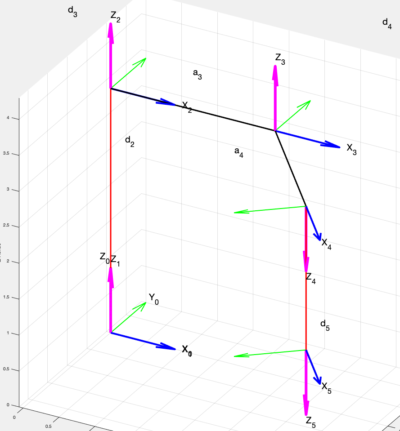
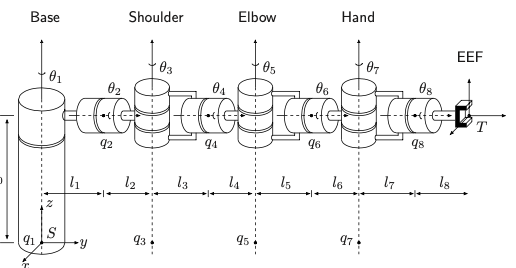
This report describes a mathematical framework based on screw theory to solve the kine- matics and dynamics of an arbitrary open chain manipulator. The configuration of two specific manipulators is described in this framework as an example. For one of the manipulators, a anthropomorphic 7 DoF arm, a closed form solution of the inverse kinematics … Read More “JournalClub: Mathematical Framework for Arbitrary Open Chain Manipulators” »
Author: jannis
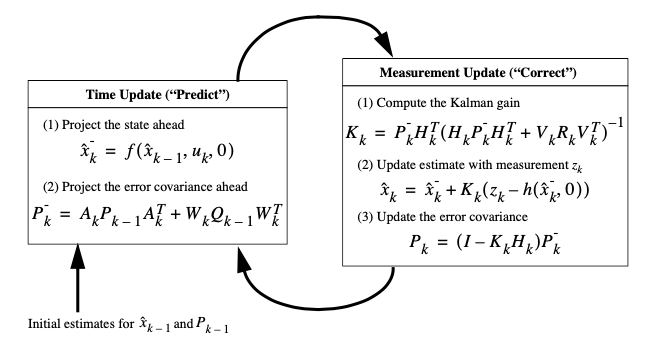
In statistics and control theory, Kalman filtering, also known as linear quadratic estimation (LQE), is an algorithm that uses a series of measurements observed over time, containing statistical noise and other inaccuracies, and produces estimates of unknown variables that tend to be more accurate than those based on a single measurement alone, by estimating a … Read More “JournalClub: An Introduction to Kalman Filter” »
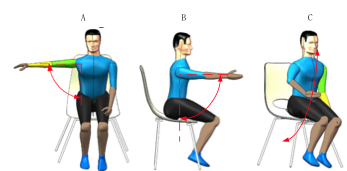
The continuous control of rehabilitation robots based on surface electromyography (sEMG) isa natural control strategy that can ensure human safety and ease the discomfort of human-machine coupling.However, current models for estimating movement of the upper limb focus on two dimensions movement,and models of three dimensions movement are too complex. In this paper, a simple-structure temporalinformation-based … Read More “JournalClub: A Continuous Estimation Model of Upper Limb Joint Angles by Using Surface Electromyography and Deep Learning Method” »
Artificial neural networks are universal function approximators. They can forecast dynamics, but they may need impractically many neurons to do so, especially if the dynamics is chaotic. We use neural networks that incorporate Hamiltonian dynamics to efficiently learn phase space orbits even as nonlinear systems transition from order to chaos. We demonstrate Hamiltonian neural networks … Read More “JournalClub: Physics-enhanced neural networks learn order and chaos” »
Interactive simulation of the Dennavit Hardenberg convention for open chain manipulators (robot arms)
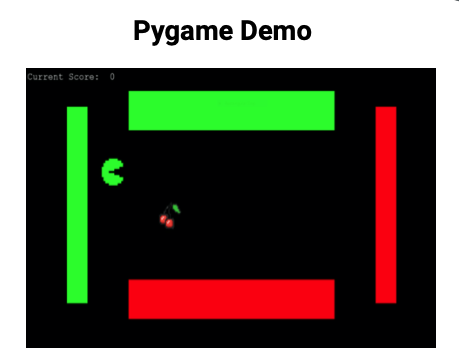
Student project within the module “Autonomous Systems” at Ruhr West University of Applied Sciences. Students Nils Biernacki, Lukas Kandora, Katharina Stefanski, Philipp Student Supervision M.Sc. Nique Schmidt and Prof. Dr. Ioannis Iossifidis Project site https://gitlab.hs-ruhrwest.de/iSystemsStudentProjects/2020/eeg-emg-gamecontroller live demo
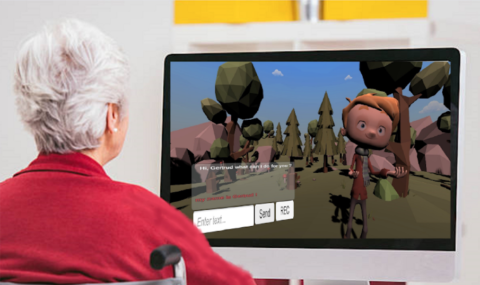
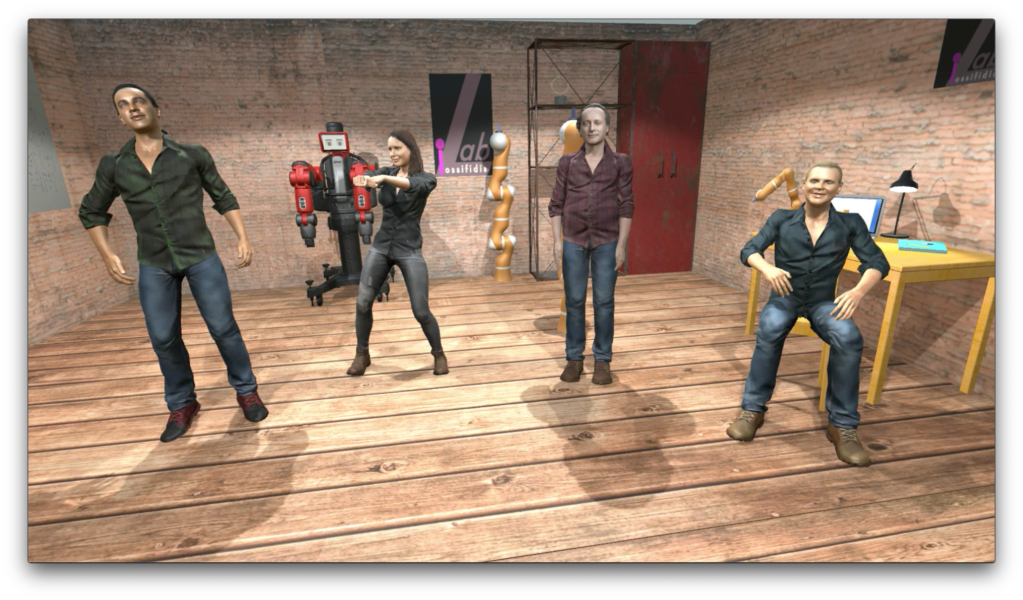
Student project within the module “Autonomous Systems” at Ruhr West University of Applied Sciences. Students Lars Buck, Tim Habermann Supervision M.Sc. Stephan Lehmler, Prof. Dr. Ioannis Iossifidis Project site The project aim to create a dialog bot with an animated avatar able to have a casual conversation and to assist the user. The dialog bot is supposed … Read More “Autonomous Systems: dialogBot for simulated conversation” »
Student project within the module “Autonomous Systems” at Ruhr West University of Applied Sciences. Students Merih Türkoglu, Matthias Weibrecht Supervision Prof. Dr. Ioannis Iossifidis Project site https://gitlab.hs-ruhrwest.de/iSystemsStudentProjects/2020/generic-gesture-recognition-and-classification-for-game-vr-control The goal of this project is to develop a gesture recognition based on common webcams and low budget hardware to implement hand gesture control in any application. live demo
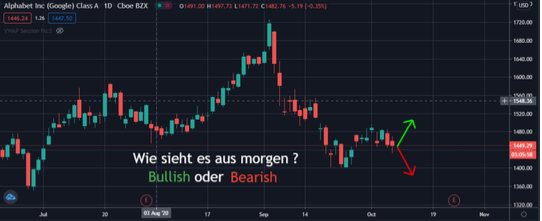
Student project within the module “Autonomous Systems” at Ruhr West University of Applied Sciences. Students Alexander Klee, Mahdi El Mesoudy,Jan Dehlen Supervision M.Sc. Felix Grün and M.Sc. Stephan Lehmer Prozent site https://gitlab.hs-ruhrwest.de/iSystemsStudentProjects/2020/ml-based-stockmarket-prediction live demo of the command line tool
Consortium: Prof. Dr. Ioannis Iossifidis (PI, consortium lead), Dr. Christian Klaes (PI), Ruhr University Bochum-Knappschaft University Hospital, Prof. Dr. Martin Tegenthoff (PI) Ruhr University- Bergmannsheil University Hospital, Dr. Corinna Weber, Snap GmbH (PI)) Project duration: 01/2020 — 12/2022 Funding volume: € 2.092.917,- Restrictions in hand and arm function are a highly relevant consequence of neurological diseases, … Read More “Virtual reality based Machine Learning for Arm-Hand Function Evaluation and Support System (VAFES)” »