The generation of discrete movement with distinct and stable time courses characterizes each human movement and reflect the need to perform catching and interception tasks and for timed action sequences, incorporating dynamically changing environmental constraints.
Several lines of evidence suggest neuronal mechanism for the initiation of movements i.e. in the supplementary motor area (SMA) and the premotor cortex and for movement planning mechanism generating velocity profiles satisfying time constraints.
In order to meet the requirements of on-line evolving trajectories we propose a model, based on dynamical systems which describes goal directed trajectories in humans and generates trajectories for redundant anthropomorphic robotic arms. The analysis of the attractor dynamics based on the qualitative comparison with measurements of resulting trajectories taken from arm movement experiments with humans created a framework able to reproduce and to generate naturalistic human like arm trajectories.
Category: scientific publication
The generation of discrete movement with distinct and stable time courses characterizes each human movement and reflect the need to perform catching and interception tasks and for timed action sequences, incorporating dynamically changing environmental constraints.
Several lines of evidence suggest neuronal mechanism for the initiation of movements i.e. in the supplementary motor area (SMA) and the premotor cortex and for movement planning mechanism generating velocity profiles satisfying time constraints.
In order to meet the requirements of on-line evolving trajectories we propose a model, based on dynamical systems which describes goal directed trajectories in humans and generates trajectories for redundant anthropomorphic robotic arms. The analysis of the attractor dynamics based on the qualitative comparison with measurements of resulting trajectories taken from arm movement experiments with humans created a framework able to reproduce and to generate naturalistic human like arm trajectories.
Over the last decades the generation mechanism and the representation of goal- directed movements has been a topic of intensive neurophysiological research. The investigation in the motor, premotor, and parietal areas led to the discovery that the direction of hand’s movement in space was encoded by populations of neurons in these areas together with many other movement parameters. These distributions of population activation reflect how movements are prepared ahead of movement initiation, as revealed by activity induced by cues that precede the imperative signal (Georgopoulos, 1991).
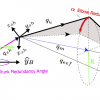

Inspired by those findings a model based on dynamical systems was proposed both, to model goal directed trajectories in humans and to generate trajectories for redundant anthropomorphic robotic arms. The analysis of the attractor dynamics based on the qualitative comparison with measurements of resulting trajectories taken from arm movement experiments with humans (Grimme u. a., 2012) created a framework able to reproduce and to generate naturalistic human like arm trajectories (Iossifidis und Rano, 2013; Iossifidis, Schöner u. a., 2006).
In the current work a closed form solution for a multi redundant open chain manipulator is presented. Exploiting the geometrical properties of the open chain we derive first ananalytic solution for the seven degree of freedom arm. And introduce then a methodology to incorporate additional degree of freedoms in the chain preserving the closed form … Read More “ICRA2013:Closed Form Solution for Inverse Kinematical Mapping for Redundant Open Chain Manipulators (submitted)” »
In the current work a closed form solution for a multi redundant open chain manipulator is presented. Exploiting the geometrical properties of the open chain we derive first an analytic solution for the seven degree of freedom arm. And introduce then a methodology to incorporate additional degree of freedoms in the chain preserving the closed … Read More “ICRA2013:Closed Form Solution for Inverse Kinematical Mapping for Redundant Open Chain Manipulators(submitted)” »
Treffen Sie uns auf der ITSC2012 in Alaska. Wir präsentieren unsere Arbeit zur Entwicklung einer integrierten Architektur zur Entwicklung und Prüfung von Fahrerassistenzsystemen. Abastract: Advanced Driver Assistant Systems act, by definition in natural, often poorly structured, environments and are supposed to closely interact with human operators. Both, natural environments as well as human behaviour have no … Read More “ITSC2012: An Integrated Architecture for the Development and Assessment of ADAS” »
Meet us at the ITSC2012 in Alaska. We will present our work about an integrated architecture for the development and assessment of ADAS. Abastract: Advanced Driver Assistant Systems act, by definition in natural, often poorly structured, environments and are supposed to closely interact with human operators. Both, natural environments as well as human behaviour have no … Read More “ITSC2012: An Integrated Architecture for the Development and Assessment of ADAS” »
The generation of behavior for autonomous robots in complex environments is restricted by a potentially large number of constraints that must be observed. For many tasks, the relevant constraints can be expressed in a specific, low-dimensional reference frame. The dynamic systems approach to autonomous robotics represents constraints as attractors or repellors over such behaviorally … Read More “Humanoids 2010: Integrating Orientation Constraints Into the Attractor Dynamics Approach for Autonomous Manipulation” »