Skip to content
iLab: From Brain to Machine and Back

iLab: From Brain to Machine and Back

iossifidis Lab

  • Home
  • Research Projects
  • Publications
  • Software
  • Press and Media
  • Student’s Zone — Teaching
    • Thesis topics
    • Student Projects
    • Journal Club & Progress Club
    • Lab Course
    • Lectures – Vorlesungen
  • About us
    • The Team
    • Contact
    • Impressum
  • Home
  • thesis

Tag: thesis

Bacherlorarbeit: Artificial Muscle Signal Generation using Generative Adversarial Networks

Posted on October 15, 2022June 20, 2023 By jannis
Bacherlorarbeit: Artificial Muscle Signal Generation using Generative Adversarial Networks
teaching

Angefertigt am 20. Dezember 2021 von Mahdi El Mesoudy

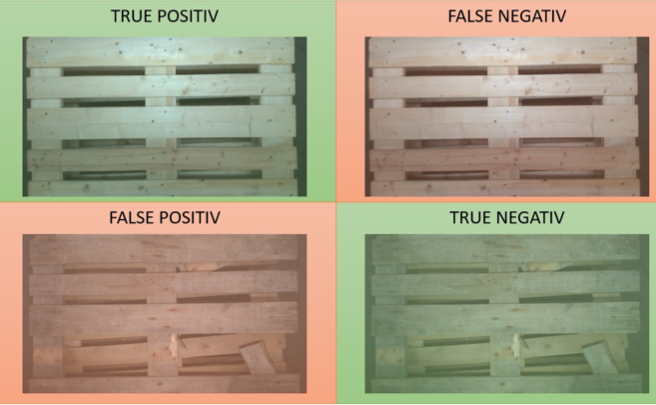
Pallets Detection and position tracking for automated guided vehicles

Posted on January 20, 2022January 20, 2022 By Muhammad Saif-Ur-Rehman
Pallets Detection and position tracking for automated guided vehicles
teaching

Bachelorarbeitsthema Significance of the proposed Master thesis The use of autonomous vehicles is vital in the manufacturing and distribution operations. The automated guided vehicles (AGVs) provide reliable and efficient product handling in several industrial applications. Goals of the proposed Master thesis In this Master thesis, we are aiming a deep learning-based solution for pallet detection … Read More “Pallets Detection and position tracking for automated guided vehicles” »

An investigation of existence of the adversarial inputs in the brain-computer interface (BCI) applications (Thesis proposal)

Posted on November 9, 2020December 30, 2021 By Muhammad Saif-Ur-Rehman
An investigation of existence of the adversarial inputs in the brain-computer interface (BCI) applications (Thesis proposal)
teaching

Masterarbeitsthema Abstract: Brain-computer interface (BCI), “the recipe of decoding intended actions from neural signals” is a way forward towards creating an intelligent neuroprosthetics solution. Deep learning (DL) algorithms provide many state-of-the-art results in the rapidly growing BCI applications. Despite this fact, DL algorithms are fragile against synthetic inputs called “adversarial inputs”. These inputs can be … Read More “An investigation of existence of the adversarial inputs in the brain-computer interface (BCI) applications (Thesis proposal)” »

Online SpikeDeep-Classifier: The supervised learning based online spike sorting algorithm (Thesis-Proposal)

Posted on November 9, 2020November 9, 2020 By Muhammad Saif-Ur-Rehman No Comments on Online SpikeDeep-Classifier: The supervised learning based online spike sorting algorithm (Thesis-Proposal)
Online SpikeDeep-Classifier: The supervised learning based online spike sorting algorithm (Thesis-Proposal)
teaching

Abstract: A spike sorting algorithm allows the identification of the activity of each neural source. We published two studies SpikeDeeptector and SpikeDeep-Classifier in the journal of the neural engineering. This study is based on our previously published studies. In this study, we aim to identify the neural activity of each source, online. More importantly, we … Read More “Online SpikeDeep-Classifier: The supervised learning based online spike sorting algorithm (Thesis-Proposal)” »

Muscle Fatigue Estimator (Thesis-Proposal)

Posted on November 2, 2020December 30, 2021 By nique
Muscle Fatigue Estimator (Thesis-Proposal)
teaching

Everyone has experienced muscle fatigue during daily life, but it is more common during physical training or after an illness. In our research project, the muscle fatigue estimator is used as a control unit that regulates the amount of support provided by an exoskeletal system. To be more precise, the estimator is intended to predict … Read More “Muscle Fatigue Estimator (Thesis-Proposal)” »

Spike-Deeptector in conjunction with artifact rejector: A deep-learning based feature extractor for online invasive BCI applications (Thesis-Proposal)

Posted on October 9, 2020November 2, 2020 By Muhammad Saif-Ur-Rehman No Comments on Spike-Deeptector in conjunction with artifact rejector: A deep-learning based feature extractor for online invasive BCI applications (Thesis-Proposal)
Spike-Deeptector in conjunction with artifact rejector:  A deep-learning based feature extractor for online invasive BCI applications (Thesis-Proposal)
teaching

Brain-computer interface (BCI) systems are a rapidly growing technology that controlsexternal devices, e.g. a neuroprosthetic limb, by directly decoding intended movements from the recorded neural activities and bypassing the spinal cord. Decoding neural activity is a two-step process, feature vector extraction and classification/regression. In online BCI applications, non-stationary behavior of neural signals makes the process of … Read More “Spike-Deeptector in conjunction with artifact rejector: A deep-learning based feature extractor for online invasive BCI applications (Thesis-Proposal)” »

Control of a Brushless DC Motor (Thesis-Proposal)

Posted on October 9, 2020November 2, 2020 By ayaz No Comments on Control of a Brushless DC Motor (Thesis-Proposal)
Control of a Brushless DC Motor (Thesis-Proposal)
teaching

contact: Muhammad Ayaz Hussain, M. Sc., Tel: +49 208 88254806muhammad.hussain@hs-ruhrwest.de A brushless dc (BLDC) motor drive is characterized by higher efficiency, lower maintenance, and higher cost. In a market driven by profit margins, the appliance industry is reluctant to replace the conventional motor drives with the advanced motor drives (BLDC) due to their higher cost. … Read More “Control of a Brushless DC Motor (Thesis-Proposal)” »

Comparing and Evaluating Prioritized Experience Replay Methods in Reinforcement Learning (Thesis-Proposal)

Posted on October 9, 2020November 2, 2020 By felix No Comments on Comparing and Evaluating Prioritized Experience Replay Methods in Reinforcement Learning (Thesis-Proposal)
Comparing and Evaluating Prioritized Experience Replay Methods in Reinforcement Learning (Thesis-Proposal)
teaching

Reinforcement Learning (RL) is a subdomain of machine learning that has developed rapidly in recent years and has become increasingly popular. In reinforcement learning an agent learns from experience using a scalar reward signal, in contrast to learning from examples of labelled data as it is done in supervised machine learning. The agent interacts with … Read More “Comparing and Evaluating Prioritized Experience Replay Methods in Reinforcement Learning (Thesis-Proposal)” »

Comparing and Evaluating Distributional Reinforcement Learning Methods (Thesis Proposal)

Posted on October 9, 2020November 2, 2020 By felix No Comments on Comparing and Evaluating Distributional Reinforcement Learning Methods (Thesis Proposal)
Comparing and Evaluating Distributional Reinforcement Learning Methods (Thesis Proposal)
teaching

Reinforcement Learning (RL) is a subdomain of machine learning that has developed rapidly in recent years and has become increasingly popular. In reinforcement learning an agent learns from experience using a scalar reward signal, in contrast to learning from examples of labelled data as it is done in supervised machine learning. The agent interacts with … Read More “Comparing and Evaluating Distributional Reinforcement Learning Methods (Thesis Proposal)” »

Recent Posts

  • (no title) June 18, 2026
  • New journal article: Predicting Muscle Activity from Upper Limb Kinematics with LSTM Networks June 7, 2026
  • New preprint: The Spatial and Temporal Resolution of Motor Intention in Multi-Target Prediction June 7, 2026
  • New paper: Performance Boundaries for BCIs Using Error-Related Potentials and Reinforcement Learning June 7, 2026
  • New paper: Distributional Properties of ReLU-Activations in Neural Networks That Learn by Memorization June 7, 2026

Recent Comments

    Archives

    • June 2026
    • May 2026
    • October 2025
    • January 2025
    • October 2024
    • September 2024
    • September 2023
    • June 2023
    • December 2022
    • October 2022
    • September 2022
    • May 2022
    • February 2022
    • January 2022
    • November 2021
    • August 2021
    • June 2021
    • April 2021
    • March 2021
    • February 2021
    • December 2020
    • November 2020
    • October 2020
    • September 2020
    • September 2019
    • October 2018
    • December 2017
    • September 2017
    • July 2016
    • December 2015
    • November 2013
    • October 2013
    • August 2013
    • May 2013
    • July 2012
    • March 2012
    • February 2012
    • January 2012
    • December 2011
    • September 2011
    • March 2011
    • June 2010
    • May 2010
    • April 2010
    • March 2010
    • September 2009
    • July 2009
    • May 2009
    • April 2009
    • March 2009
    • February 2009

    Categories

    • Conference participation
    • Grant
    • invited talk
    • journal club
    • press release
    • progress club
    • publication
    • research grand
    • scientific publication
    • software released
    • teaching
    • workshop

    Meta

    • Log in
    • Entries feed
    • Comments feed
    • WordPress.org

    Copyright © Ioannis Iossifidis 2020 iLab: From Brain to Machine and Back.

    Theme: Oceanly by ScriptsTown

    We use cookies on our website to give you the most relevant experience by remembering your preferences and repeat visits. By clicking “Accept All”, you consent to the use of ALL the cookies. However, you may visit "Cookie Settings" to provide a controlled consent.
    Cookie SettingsAccept All
    Manage consent

    Privacy Overview

    This website uses cookies to improve your experience while you navigate through the website. Out of these, the cookies that are categorized as necessary are stored on your browser as they are essential for the working of basic functionalities of the website. We also use third-party cookies that help us analyze and understand how you use this website. These cookies will be stored in your browser only with your consent. You also have the option to opt-out of these cookies. But opting out of some of these cookies may affect your browsing experience.
    Necessary
    Always Enabled
    Necessary cookies are absolutely essential for the website to function properly. These cookies ensure basic functionalities and security features of the website, anonymously.
    CookieDurationDescription
    cookielawinfo-checkbox-analytics11 monthsThis cookie is set by GDPR Cookie Consent plugin. The cookie is used to store the user consent for the cookies in the category "Analytics".
    cookielawinfo-checkbox-functional11 monthsThe cookie is set by GDPR cookie consent to record the user consent for the cookies in the category "Functional".
    cookielawinfo-checkbox-functional11 monthsThe cookie is set by GDPR cookie consent to record the user consent for the cookies in the category "Functional".
    cookielawinfo-checkbox-necessary11 monthsThis cookie is set by GDPR Cookie Consent plugin. The cookies is used to store the user consent for the cookies in the category "Necessary".
    cookielawinfo-checkbox-necessary11 monthsThis cookie is set by GDPR Cookie Consent plugin. The cookies is used to store the user consent for the cookies in the category "Necessary".
    cookielawinfo-checkbox-others11 monthsThis cookie is set by GDPR Cookie Consent plugin. The cookie is used to store the user consent for the cookies in the category "Other.
    cookielawinfo-checkbox-performance11 monthsThis cookie is set by GDPR Cookie Consent plugin. The cookie is used to store the user consent for the cookies in the category "Performance".
    cookielawinfo-checkbox-performance11 monthsThis cookie is set by GDPR Cookie Consent plugin. The cookie is used to store the user consent for the cookies in the category "Performance".
    viewed_cookie_policy11 monthsThe cookie is set by the GDPR Cookie Consent plugin and is used to store whether or not user has consented to the use of cookies. It does not store any personal data.
    viewed_cookie_policy11 monthsThe cookie is set by the GDPR Cookie Consent plugin and is used to store whether or not user has consented to the use of cookies. It does not store any personal data.
    Functional
    Functional cookies help to perform certain functionalities like sharing the content of the website on social media platforms, collect feedbacks, and other third-party features.
    Performance
    Performance cookies are used to understand and analyze the key performance indexes of the website which helps in delivering a better user experience for the visitors.
    Analytics
    Analytical cookies are used to understand how visitors interact with the website. These cookies help provide information on metrics the number of visitors, bounce rate, traffic source, etc.
    Advertisement
    Advertisement cookies are used to provide visitors with relevant ads and marketing campaigns. These cookies track visitors across websites and collect information to provide customized ads.
    Others
    Other uncategorized cookies are those that are being analyzed and have not been classified into a category as yet.
    SAVE & ACCEPT